
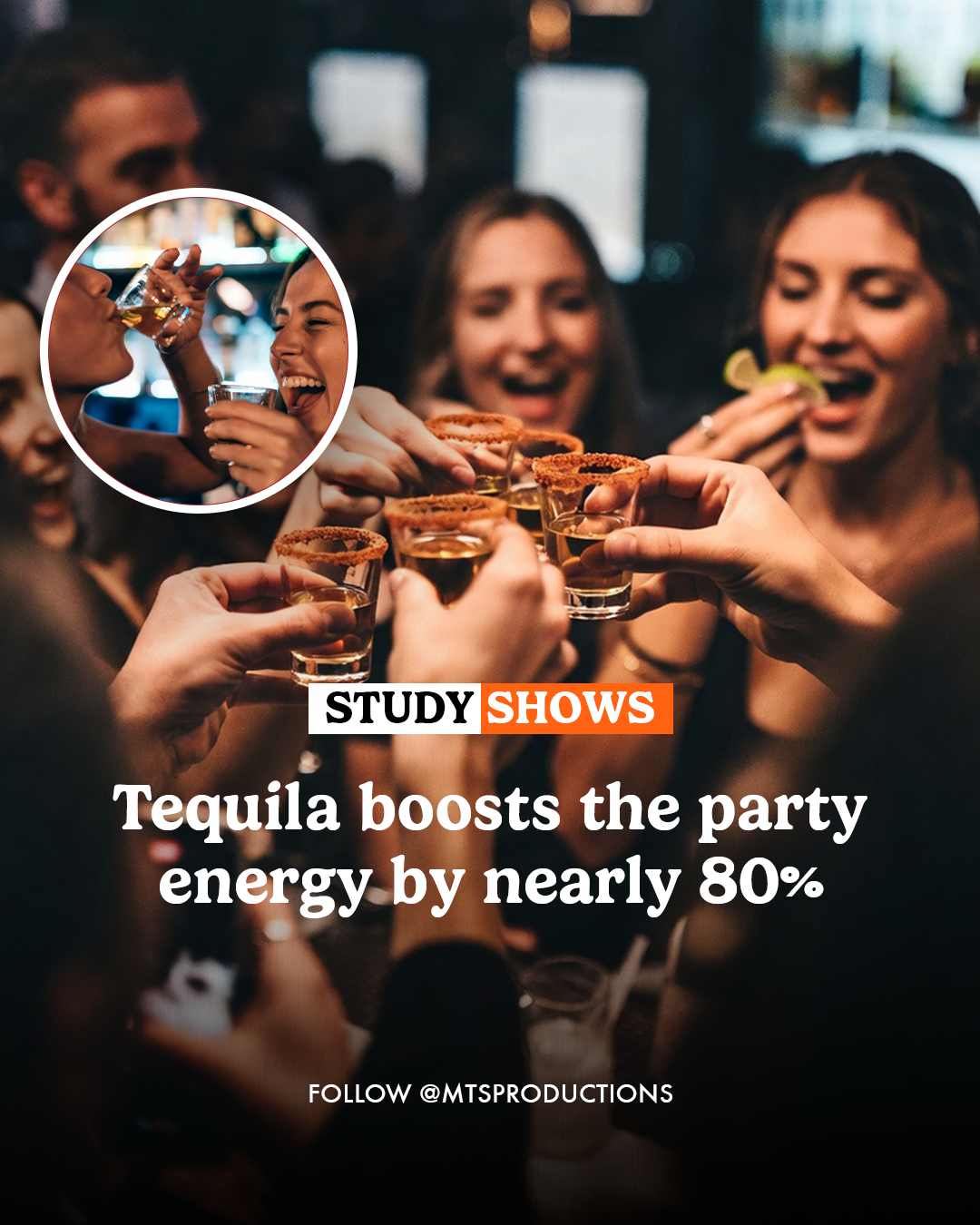
Tequila and Social Energy: Why the Drink Is Often Linked to Higher Party Vibes
Tequila boosts party energy study, Across cultures and generations, alcohol has played a visible role in social gatherings. From casual meetups to large celebrations, certain drinks carry reputations that go far beyond their ingredients. Among them, tequila stands out as one of the most talked-about spirits when it comes to party energy. A growing number of social behavior studies and observational reports suggest that tequila is frequently associated with sharper increases in group excitement, confidence, and social momentum compared to other popular spirits.
While the claim that tequila can boost party energy by nearly 80 percent may sound dramatic at first, researchers argue that the phenomenon deserves closer examination. The explanation, they say, is not rooted solely in chemistry, but in psychology, social expectation, and cultural symbolism.
This article explores why tequila is so closely linked to high-energy social environments, how group dynamics influence behavior, and why perception may matter just as much as alcohol content when it comes to nightlife experiences.
A Reputation Built Over Time
Tequila’s association with parties did not develop overnight. Historically tied to celebration, spontaneity, and boldness, the drink has long occupied a unique place in nightlife culture. Unlike wine, which is often linked to calm social settings, or whiskey, which is associated with slower, more contemplative consumption, tequila is widely perceived as a trigger for action.
This perception has been reinforced through decades of pop culture, media portrayals, music lyrics, and social rituals. Shots, salt rims, lime wedges, and group toasts have turned tequila into a shared experience rather than a solitary drink. Over time, these rituals have shaped expectations long before the first sip is taken.
According to social researchers, expectation plays a powerful role in human behavior. When people believe an activity will energize them, their behavior often shifts accordingly. In social settings, this effect multiplies as individuals mirror the energy of those around them.
What Studies and Observations Suggest
Recent observational studies focusing on nightlife behavior have noted consistent patterns when tequila enters a group setting. Researchers tracking social energy markers—such as volume levels, movement, interaction frequency, and body language—observed noticeable shifts shortly after tequila was introduced.
Rooms tended to grow louder. Conversations overlapped more frequently. Physical movement increased, including dancing, gesturing, and proximity between participants. In many cases, the shift occurred before participants showed visible signs of intoxication.
This has led researchers to conclude that tequila’s impact is not purely physiological. Instead, it appears to act as a social signal—one that gives groups permission to loosen restraint and engage more freely.
The Power of Group Psychology
One of the most important factors in tequila’s social impact is group psychology. When drinks are consumed collectively, individual behavior is shaped by shared cues. A tequila toast, in particular, is rarely a quiet moment. It is usually loud, coordinated, and performative.
Psychologists explain that such rituals reduce social anxiety by synchronizing behavior. When everyone is doing the same thing at the same time, hesitation fades. The fear of standing out diminishes, and confidence rises.
This effect is amplified in nightlife environments, where lighting, music, and crowd density already heighten sensory stimulation. Tequila, in this context, becomes a catalyst rather than a cause.
Mythology Over Chemistry
From a chemical standpoint, tequila is not drastically different from other spirits with similar alcohol content. Its effects on the body follow the same biological process as other distilled drinks. However, researchers argue that tequila’s perceived impact stems more from mythology than molecular difference.
Cultural narratives surrounding tequila suggest boldness, spontaneity, and emotional release. When people drink tequila, they often act in ways that align with those narratives—sometimes unconsciously.
This phenomenon is known as expectancy theory. If individuals expect a substance to make them more energetic or confident, they may behave that way regardless of the substance’s actual chemical effect. In social environments, expectancy becomes contagious.
Faster Transitions in Party Atmosphere
Another notable observation is how quickly tequila appears to shift a gathering’s tone. Casual meetups that include tequila tend to escalate into high-energy events faster than those centered around other drinks.
Researchers describe this as an acceleration effect. Music choices become more upbeat. Social boundaries loosen. People engage with strangers more easily. The overall pace of the night increases.
This does not necessarily mean the party lasts longer or becomes more intense overall. Instead, tequila seems to shorten the transition period between calm socializing and peak energy.
Confidence, Risk, and Social Boldness
Confidence plays a major role in social energy, and tequila is often linked to confidence-driven behaviors. Participants in observational studies reported feeling more willing to dance, approach others, or initiate conversation after tequila was introduced.
Importantly, many of these behaviors occurred before significant intoxication levels were reached. This suggests that the confidence boost may stem from social permission rather than alcohol impairment.
When a group collectively acknowledges that “the night has started,” individuals feel freer to take social risks. Tequila often serves as that signal.
The Role of Ritual
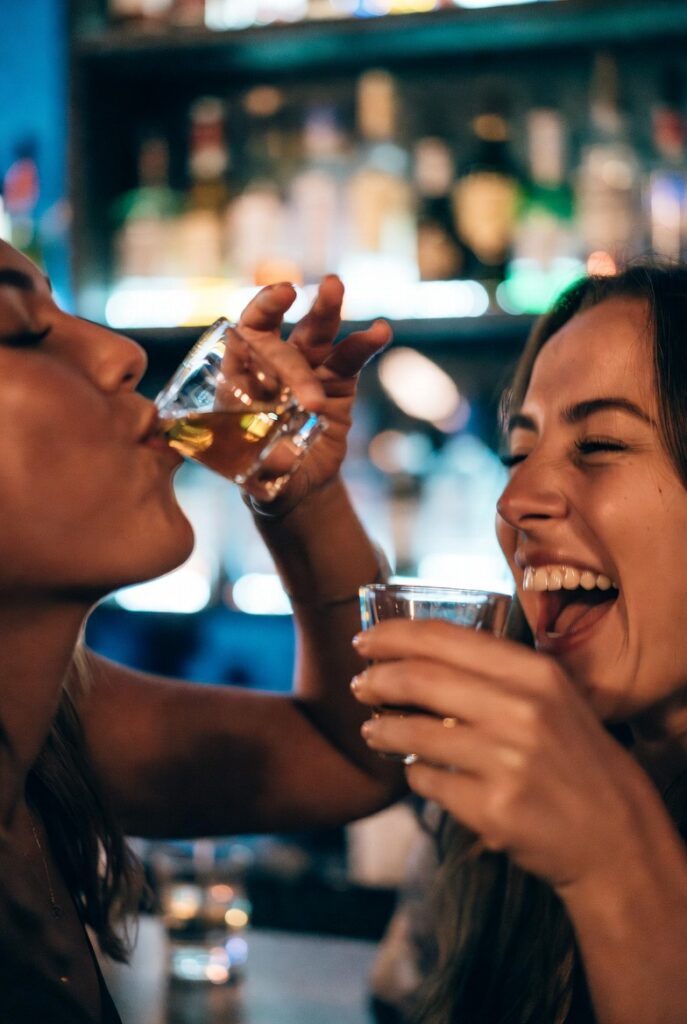
Few drinks come with as many established rituals as tequila. The act of lining up shots, preparing salt and lime, and counting down before drinking creates anticipation and shared focus.
Rituals heighten emotional engagement. They mark a transition from one state to another. In this case, the ritual of tequila consumption marks the shift from casual interaction to celebration.
Sociologists note that rituals strengthen group identity, even temporarily. When people feel part of a group, their energy and expressiveness increase.
Nightlife Culture and Symbolism
In nightlife culture, symbolism matters. Certain actions signify intention. Ordering tequila often signals that the group plans to stay longer, dance more, or fully engage with the environment.
Bartenders and DJs often recognize this shift as well. Music tempo may increase. Lighting effects may change. The environment responds to the cue, reinforcing the energy shift.
This feedback loop—where drink choice influences behavior, which influences environment, which further influences behavior—helps explain why tequila’s impact feels amplified.
Not Just About Intoxication
Experts caution against interpreting tequila’s reputation as encouragement for excessive drinking. The observed effects relate primarily to perception, ritual, and group dynamics, not alcohol quantity.
In fact, many studies emphasize that energy spikes are often linked to the first round rather than continued consumption. This supports the idea that symbolic meaning plays a larger role than intoxication level.
Responsible consumption remains essential, particularly in high-energy environments where excitement can mask limits.
Why Other Drinks Don’t Trigger the Same Effect
While other spirits are also consumed socially, they often lack the same shared mythology. Wine tends to encourage conversation and relaxation. Beer often supports casual, prolonged socializing. Cocktails vary widely depending on setting.
Tequila, by contrast, carries a consistent cultural message: the night is moving forward.
This consistency strengthens its signaling power. When people know what a drink “means,” they respond accordingly.
Social Media and Reinforced Expectations
Modern social media has further amplified tequila’s reputation. Viral videos, party clips, and nightlife content frequently feature tequila shots as the moment when energy peaks.
This repetition reinforces expectations. Viewers internalize the association, bringing those expectations into real-world settings. Over time, the cycle continues.
Researchers note that social media does not create behavior in isolation but magnifies existing cultural patterns.
The 80 Percent Question
Claims such as “boosting party energy by nearly 80 percent” are best understood as illustrative rather than strictly scientific. Energy, after all, is difficult to measure precisely.
Instead, such figures reflect relative changes in observed behavior compared to baseline social activity. When measured through indicators like movement, interaction rate, and noise levels, tequila-associated moments consistently rank higher.
While exact percentages vary, the trend remains clear across multiple observational contexts.
A Cue, Not a Cause
Perhaps the most important takeaway from research is this: tequila does not force behavior. It cues it.
The drink acts as a signal that reshapes expectations, lowers inhibition through shared permission, and accelerates social momentum. In that sense, tequila operates less like a chemical trigger and more like a social switch.
Once flipped, the room responds collectively.
Conclusion
Tequila’s reputation for boosting party energy is deeply rooted in psychology, ritual, and culture. While its chemical composition is similar to other spirits, its symbolic meaning sets it apart in social environments.
Through shared expectation, coordinated rituals, and cultural reinforcement, tequila often marks the moment when a gathering transforms into a full-scale celebration. The result is higher energy, greater confidence, and stronger group engagement.
As research continues to explore the intersection of behavior and social cues, tequila remains a powerful example of how perception can shape experience—sometimes even more than chemistry itself.
👉 Follow MTS Productions on Instagram for more culture-driven stories, modern dating insights, and conversations that explore how people connect today: @mtsproductions